The Impact of Green Products on Sustainable Tourism

As you consider the environmental impact of your travel choices, you may wonder how green products contribute to sustainable tourism. You can make a positive difference by choosing eco-friendly options. According to a study on The effect of green products on sustainable tourism development, your decisions can influence the tourism industry’s sustainability. By understanding the benefits of green products, you can make informed choices that support your values and promote a more sustainable future for tourism.

Key Takeaways:

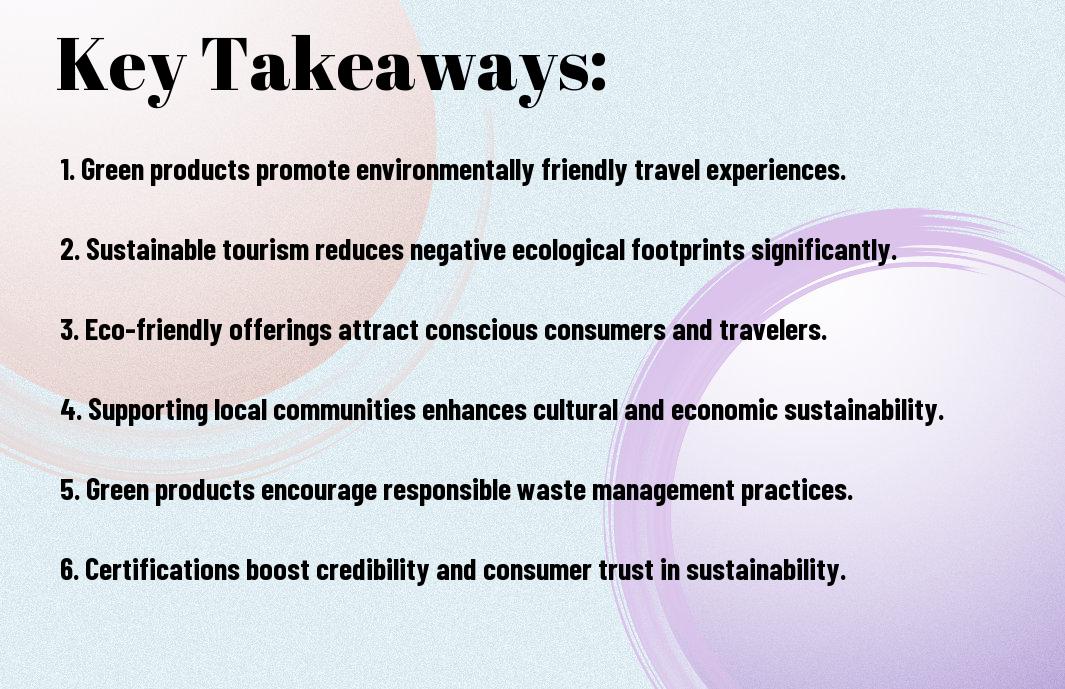
  • The adoption of green products in the tourism industry can significantly contribute to sustainable tourism by reducing the sector’s environmental footprint and promoting eco-friendly practices.
  • The use of renewable energy sources and energy-efficient technologies in tourism facilities can help minimize carbon emissions and mitigate the impact of climate change.
  • The implementation of sustainable tourism practices and the promotion of eco-tourism activities can support the conservation of biodiversity and the protection of natural resources, ultimately enhancing the tourism experience for visitors.
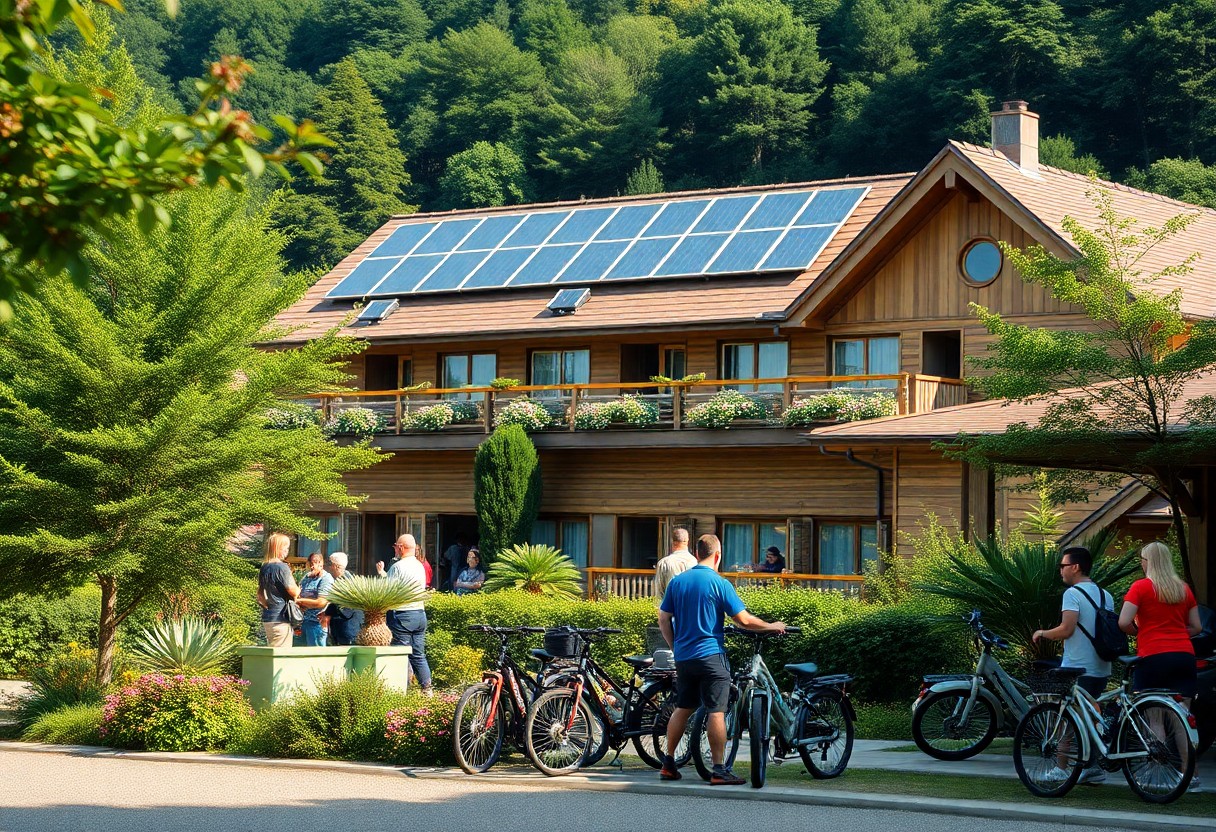
The Role of Green Products

To effectively promote sustainable tourism, you should consider the significance of green products in reducing your environmental footprint. By choosing eco-friendly products, you contribute to a more sustainable tourism industry, benefiting both the environment and local communities.

Environmental Benefits

Albeit small, your individual actions can collectively make a significant impact on the environment when you opt for green products, reducing waste and conserving natural resources, which in turn helps preserve the beauty of tourist destinations for your future visits.

Economic Advantages

Across the globe, you will find that green products can support local economies by promoting sustainable practices and fair trade, allowing you to contribute to the well-being of communities you visit while also enhancing your travel experience.

Environmental conservation is closely tied to economic advantages, as you will find that sustainable tourism practices can increase your spending in local economies, creating jobs and stimulating growth, which in turn supports your own travel interests by preserving destinations for future generations to enjoy, making your choice of green products a sound investment in the long run.

Sustainable Tourism Practices

Assuming you want to make a positive impact on the environment, you’ll be interested to know that sustainable tourism practices are becoming increasingly popular, allowing you to enjoy your travels while minimizing your footprint.

Eco-Friendly Accommodations

Prior to booking your stay, you should consider eco-friendly accommodations that adhere to sustainable standards, reducing your environmental impact and supporting local communities, allowing you to contribute to a more sustainable tourism industry.

Responsible Travel Behaviors

Along with choosing eco-friendly accommodations, you can adopt responsible travel behaviors, such as reducing water and energy consumption, respecting local customs, and supporting local businesses, all of which contribute to a more sustainable tourism experience.

Also, as you adopt responsible travel behaviors, you’ll have the opportunity to engage with local cultures, support conservation efforts, and promote sustainable development, ultimately enhancing your travel experience and contributing to a more sustainable future for destinations you visit.

The Impact of Green Products on Tourism

Now, as you consider the effects of green products on tourism, you’ll find that they have a significant influence on your travel experiences and the environment. By choosing eco-friendly options, you can contribute to a more sustainable tourism industry.

Reduction of Carbon Footprint

Accordingly, as you opt for green products, you’ll notice a reduction in your carbon footprint, which benefits the environment and helps preserve destinations for future generations.

Promotion of Local Communities

The use of green products allows you to support local communities, promoting their economic growth and cultural preservation, which enhances your overall travel experience.

Promotion of local communities is a significant aspect of sustainable tourism, and by choosing green products, you are directly contributing to the well-being of these communities, enabling them to thrive and maintain their unique character, which in turn, allows you to experience authentic and enriching travel experiences.

Challenges and Limitations

Many sustainable tourism initiatives face significant challenges, and you may encounter these when promoting green products. You will need to consider the potential obstacles that can hinder the adoption of eco-friendly practices.

Higher Costs and Limited Availability

At the outset, you will find that green products often come with a higher price tag, making them less accessible to budget-conscious travelers. You may also struggle to find sustainable options in certain destinations, limiting your choices.

Lack of Standardization and Regulation

For instance, you may notice that the lack of standardized criteria for green products can make it difficult to evaluate their authenticity. You will need to carefully research and verify the eco-credentials of the products you choose to support.

Limited access to information and inconsistent certification processes can further complicate your efforts to make informed decisions about sustainable products. You will need to be diligent in seeking out reputable sources and trustworthy certifications to ensure that your choices align with your values and contribute to a more sustainable tourism industry.

Successful Implementations

Your travel choices can significantly impact the environment, and opting for green products is a step in the right direction, as seen in various successful implementations of sustainable tourism practices around the world.

Green Certifications and Labels

Around the globe, you’ll find numerous eco-labels and certifications that help you identify environmentally friendly products and services, making it easier for you to make informed decisions.

Innovative Sustainable Products

Certified sustainable products are becoming increasingly popular, and you can now find a wide range of innovative options, from eco-friendly toiletries to biodegradable water bottles, that cater to your needs while minimizing harm to the environment.

Hence, as you explore the world of sustainable tourism, you’ll discover that innovative sustainable products are not only better for the planet, but also offer you a unique and enriching experience, allowing you to connect with local communities and contribute to the preservation of natural resources, making your travel choices more meaningful and impactful.

Future Directions

For the future of sustainable tourism, you will see a significant shift towards eco-friendly practices, and your choices will play a vital role in driving this change. As you consider the impact of green products, you will find innovative solutions and technologies emerging to support your sustainable travel goals.

Emerging Trends and Technologies

For instance, you will notice advancements in renewable energy, sustainable accommodations, and eco-tourism activities, which will enable you to make more informed choices about your travel plans, allowing you to reduce your environmental footprint and support local communities.

Collaborative Efforts and Partnerships

Beneath the surface of sustainable tourism, you will find collaborative efforts between governments, organizations, and local communities working together to promote green practices and support environmentally-friendly initiatives, and as you explore these partnerships, you will discover new opportunities to engage with sustainable tourism.

In addition, as you research deeper into collaborative efforts and partnerships, you will find that your participation and support can make a significant difference in promoting sustainable tourism practices, and by choosing to work with organizations that prioritize the environment, you will contribute to a more sustainable future for destinations around the world, ultimately enhancing your travel experience and the well-being of local ecosystems.

Final Words

Presently, you can see the significant difference green products make in sustainable tourism. As you adopt eco-friendly practices, your contribution to the environment increases. You play a vital role in promoting sustainable tourism by choosing green products, and your actions will have a lasting impact on the planet. Your support for environmentally responsible tourism will encourage others to follow, creating a better future for your destinations and communities. You will be shaping the future of tourism, making it more sustainable for generations to come.

FAQ

Q: What are green products and how do they relate to sustainable tourism?

A: Green products refer to goods and services that have a reduced environmental impact, such as eco-friendly accommodations, sustainable transportation, and locally sourced products. These products play a significant role in sustainable tourism as they help minimize the negative effects of tourism on the environment, conserve natural resources, and promote cultural heritage preservation. By choosing green products, tourists can contribute to the conservation of destinations and support local communities, ultimately enhancing the overall tourism experience.

Q: How can green products influence tourist behavior and encourage sustainable tourism practices?

A: Green products can significantly influence tourist behavior by promoting environmentally friendly choices, such as reducing energy consumption, waste, and water usage. For instance, eco-friendly accommodations can encourage tourists to use public transport, carpool, or walk/bike, reducing carbon emissions. Moreover, sustainable tourism practices, such as participating in local conservation efforts or supporting environmentally responsible tour operators, can foster a sense of responsibility among tourists, leading to a more mindful and respectful approach to travel. By incorporating green products into their travel plans, tourists can make a positive impact on the environment and local communities.

Q: What benefits do green products offer to local communities and the environment in the context of sustainable tourism?

A: Green products offer numerous benefits to local communities and the environment, including job creation, income generation, and the preservation of natural resources. By supporting local businesses and sustainable tourism initiatives, tourists can contribute to the economic development of destinations, helping to alleviate poverty and promote social equity. Additionally, green products can help reduce pollution, protect biodiversity, and conserve natural habitats, ultimately preserving the aesthetic and cultural appeal of tourist destinations. By choosing green products, tourists can help maintain the long-term health and resilience of ecosystems, ensuring a high-quality tourism experience for future generations.

Q: How can tourists identify and choose green products that support sustainable tourism?

A: Tourists can identify and choose green products by looking for certifications, such as eco-labels or sustainable tourism certifications, which indicate that a product or service meets certain environmental and social standards. Additionally, tourists can research tour operators, accommodations, and local businesses to learn about their sustainability practices and policies. Online reviews, social media, and travel guides can also provide valuable insights into the environmental and social impact of different tourism products. By taking the time to research and choose green products, tourists can make informed decisions that support sustainable tourism and contribute to the conservation of destinations.

Q: What role do governments and tourism industries play in promoting the use of green products and supporting sustainable tourism?

A: Governments and tourism industries play a vital role in promoting the use of green products and supporting sustainable tourism by establishing and enforcing environmental regulations, providing incentives for sustainable tourism development, and raising awareness about the importance of sustainable tourism practices. Governments can also invest in sustainable infrastructure, such as renewable energy and green transportation systems, to support the growth of sustainable tourism. The tourism industry can promote green products through marketing campaigns, training programs for tourism professionals, and partnerships with local businesses and conservation organizations. By working together, governments and tourism industries can create an enabling environment that supports the adoption of green products and encourages sustainable tourism practices, ultimately contributing to the long-term sustainability of tourist destinations.

How to Make Your Outdoor Adventures Eco-Friendly

As you plan your next outdoor adventure, you can make a positive impact on the environment. You have the power to minimize your ecological footprint while still enjoying nature’s beauty. Your outdoor activities can be tailored to be eco-friendly, allowing you to explore and appreciate the natural world without harming it. You will learn how to make conscious choices to reduce your waste, conserve resources, and preserve the environment for future generations.

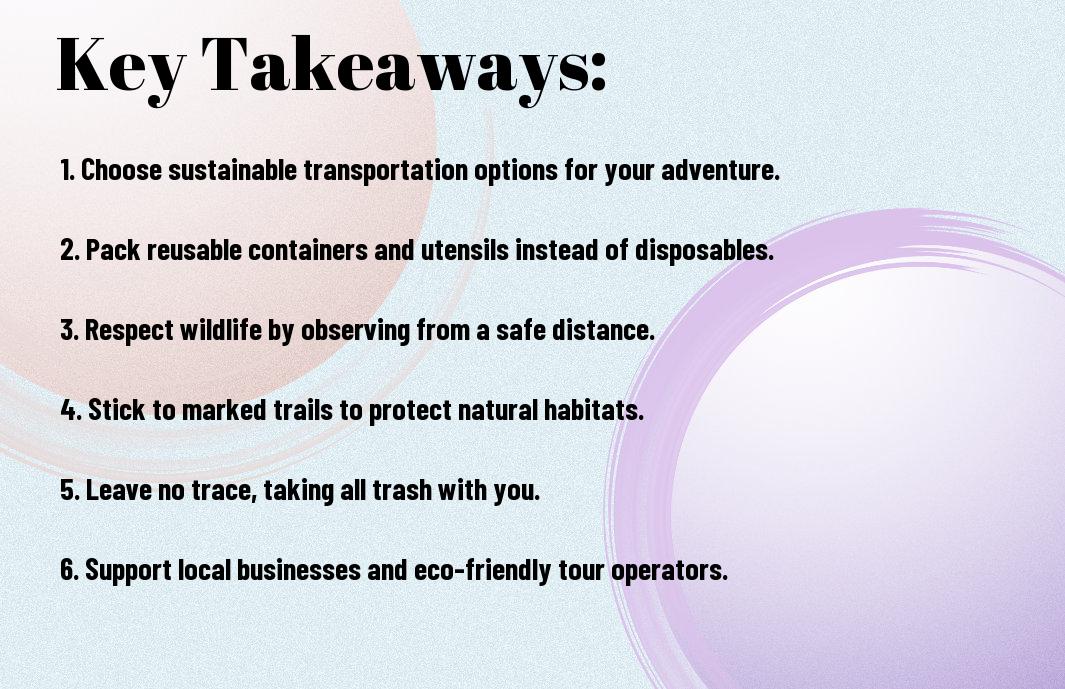
Key Takeaways:

To ensure a more sustainable approach to exploring the outdoors, consider the following points:

  • Plan your itinerary carefully to minimize waste and reduce your carbon footprint by choosing activities and destinations that have a low environmental impact.
  • Use eco-friendly gear and products, such as reusable water bottles, biodegradable soap, and sustainable clothing to reduce the amount of pollution and waste generated during your adventures.
  • Follow the leave-no-trace principles by staying on designated trails, respecting wildlife, and not littering to preserve the natural beauty and biodiversity of the environments you visit.

Planning Your Eco-Friendly Adventure

Your outdoor adventures can have a significant impact on the environment, but with some planning, you can minimize your footprint. Consider the location, duration, and type of activity to ensure a sustainable experience.

Choosing Eco-Friendly Gear

On the path to eco-friendly adventures, opting for gear made from sustainable materials, such as recycled or biodegradable products, is a great starting point. You can choose reusable water bottles, solar-powered chargers, and energy-efficient camping stoves.

Selecting Sustainable Destinations

Safeguarding the environment is key when selecting your destination, so you should choose places with minimal human impact and well-managed tourism infrastructure. You can look for destinations with eco-tourism certifications or those that support conservation efforts.

Also, when selecting sustainable destinations, you should research the local regulations and guidelines for visitors, and make sure to respect the local flora and fauna, as well as the community. You can also consider visiting during the off-season to avoid contributing to overcrowding and strain on local resources.

Reducing Waste on the Go

One of the most effective ways to minimize your environmental impact while exploring the outdoors is to reduce waste. You can achieve this by adopting a few simple habits and making conscious choices about the products you use and discard.

Packing Light and Avoiding Single-Use Plastics

Behind every successful eco-friendly adventure is careful planning and preparation. You can significantly reduce your waste output by packing light, choosing reusable containers, and avoiding single-use plastics, allowing you to enjoy your outdoor experiences without harming the environment.

Composting and Recycling on the Trail

Around every campsite or trailhead, you’ll find opportunities to manage your waste responsibly. You can compost food waste and recycle non-organic materials, keeping your outdoor space clean and preserved for future generations to enjoy.

Reducing your waste on the trail requires some extra effort, but it’s worth it to preserve the natural beauty of the outdoors. You can take advantage of composting and recycling programs offered at many campsites and parks, or take matters into your own hands by bringing reusable bags and containers to collect and store your waste, ensuring that you leave the environment in the same condition as you found it.

Respecting the Environment

Keep your outdoor adventures eco-friendly by taking steps to minimize your impact on the environment. You can start by being aware of your surroundings and taking care to avoid harming the natural world.

Following Leave No Trace Principles

Regarding the principles of Leave No Trace, you should take nothing but memories and leave nothing but bubbles, ensuring that your presence in the outdoors does not disrupt the environment.

Being Mindful of Wildlife and Their Habitats

Being considerate of the wildlife and their habitats is crucial to preserving the natural balance. You should keep a safe distance from animals and avoid disturbing their habitats to ensure their well-being.

Also, when you’re being mindful of wildlife and their habitats, you’ll want to educate yourself on the local species and their needs, so you can take steps to avoid disrupting their natural behaviors and habitats, allowing you to coexist with them in a harmonious way, and making your outdoor adventures not only enjoyable but also sustainable for you and the environment.

Sustainable Camping Practices

After setting out on your outdoor adventure, it’s imperative to adopt sustainable camping practices to minimize your environmental footprint. You can reduce your impact by choosing campsites wisely, using eco-friendly gear, and following best practices.

Choosing Campsites with Minimal Impact

Campsites that are established and well-maintained are ideal, as they reduce the risk of damaging the surrounding environment. You should look for sites that have minimal vegetation and are away from sensitive ecosystems, allowing you to enjoy nature without harming it.

Using Eco-Friendly Camping Gear and Supplies

Camping equipment and supplies can have a significant impact on the environment, but you can make a difference by choosing eco-friendly options. You should opt for gear made from sustainable materials, such as recycled polyester or bamboo, and avoid single-use plastics.

Practices such as properly disposing of waste, using a portable stove, and conserving water are also vital when using eco-friendly camping gear and supplies. You can take your sustainability to the next level by investing in a water filter or purification tablets, allowing you to source water from natural sources while minimizing your waste output.

Minimizing Carbon Footprint

Once again, you have the power to reduce your environmental impact by making conscious choices. Consider the effects of your transportation and accommodation on the environment, and opt for eco-friendly alternatives whenever possible.

Using Public Transportation or Carpooling

To reduce your carbon footprint, you can use public transportation, walk, or bike whenever possible, or carpool with friends or fellow travelers to minimize the number of vehicles on the road.

Offsetting Carbon Emissions from Travel

On your next adventure, you can offset your carbon emissions from travel by investing in carbon offset projects, such as reforestation or renewable energy, to balance out the emissions from your trip.

Even if you can’t completely eliminate your carbon emissions, you can take steps to offset them by calculating the emissions from your trip and investing in projects that reduce greenhouse gas emissions elsewhere, allowing you to make a positive impact on the environment and compensate for your travel footprint.

Supporting Eco-Friendly Tourism

All your outdoor adventures can have a positive impact when you choose eco-friendly tourism options. You can learn more about how to make your outdoor adventure more sustainable and make informed decisions.

Choosing Local and Sustainable Tour Operators

To ensure your trip is eco-friendly, you opt for local and sustainable tour operators who follow environmentally responsible practices, minimizing your impact on the environment.

Supporting Conservation Efforts and Local Communities

The local communities and conservation efforts can benefit from your support, enabling you to contribute to the preservation of natural habitats and cultural heritage.

Hence, when you support conservation efforts and local communities, you are directly contributing to the protection of the environment and promoting sustainable tourism practices, allowing you to enjoy your outdoor adventures while making a positive impact on the destinations you visit.

Summing up

Hence, by implementing simple changes, you can make your outdoor adventures eco-friendly. You can reduce your impact on the environment by choosing reusable gear, minimizing waste, and respecting wildlife. As you plan your next adventure, consider your actions and make sustainable choices to preserve the beauty of nature for your future explorations. By taking these steps, you will contribute to a healthier planet and enjoy your outdoor experiences with a clearer conscience, knowing you are protecting the environment for your own and future generations.

FAQ

Q: What are some simple ways to reduce my environmental impact when planning an outdoor adventure?

A: When planning an outdoor adventure, consider choosing destinations that are close to your home to reduce carbon emissions from transportation. You can also opt for public transport, carpool, or bike to the location. Additionally, pack lightly to minimize waste and avoid single-use plastics. Researching the area beforehand to understand any specific environmental concerns and regulations can also help you make more informed decisions.

Q: How can I minimize my waste during outdoor adventures?

A: Minimizing waste during outdoor adventures can be achieved by adopting a few simple habits. Bring reusable bags, containers, and water bottles to avoid single-use plastics. Choose products with minimal or biodegradable packaging, and avoid buying items with excess packaging. If you need to purchase supplies, opt for items that can be reused, such as a portable coffee filter instead of disposable coffee cups. Always carry a small bag to collect your trash and dispose of it properly when you return.

Q: What are some eco-friendly camping practices I should follow?

A: When camping, it’s vital to follow eco-friendly practices to minimize your impact on the environment. Choose campsites that are designated and follow the principles of “leave no trace.” This means disposing of waste properly, not polluting water sources, and not damaging the vegetation. Use eco-friendly camping gear, such as solar-powered chargers and LED lights, and avoid making campfires in sensitive ecosystems. Additionally, respect local wildlife and keep a safe distance to avoid disrupting their habitats.

Q: How can I reduce my water usage during outdoor adventures?

A: Reducing water usage during outdoor adventures is vital to conserve this precious resource. Bring a water filter or purification tablets to avoid buying bottled water. Use biodegradable soap and toothpaste, and wash dishes and hands in a bucket to conserve water. When swimming or bathing in natural water sources, avoid using harsh chemicals that can harm aquatic life. Finally, report any water pollution or issues you encounter to local authorities to help maintain the health of these ecosystems.

Q: What are some ways to respect and protect local wildlife during outdoor adventures?

A: Respecting and protecting local wildlife is vital during outdoor adventures. Keep a safe distance from animals to avoid disrupting their natural behaviors, and never feed them as this can alter their diets and make them dependent on humans. Avoid littering and disposing of trash properly, as it can harm wildlife who may mistake it for food. Be mindful of sensitive habitats and avoid damaging vegetation or disturbing nests. Finally, support local conservation efforts and respect any rules or regulations in place to protect wildlife, such as staying on designated trails and not touching or handling animals.

The Best Eco-Friendly Tech Gadgets in 2025

As you consider upgrading your tech devices, you’re likely looking for options that not only enhance your daily life but also minimize your environmental footprint. You want gadgets that are innovative, efficient, and sustainable. In this post, you’ll discover the most eco-friendly tech gadgets of 2025, designed to reduce waste and promote a greener future. Your search for sustainable tech solutions ends here, as we explore the best devices that combine cutting-edge technology with environmental responsibility.

Key Takeaways:

To stay updated on the latest eco-friendly trends in technology, consider the following points:

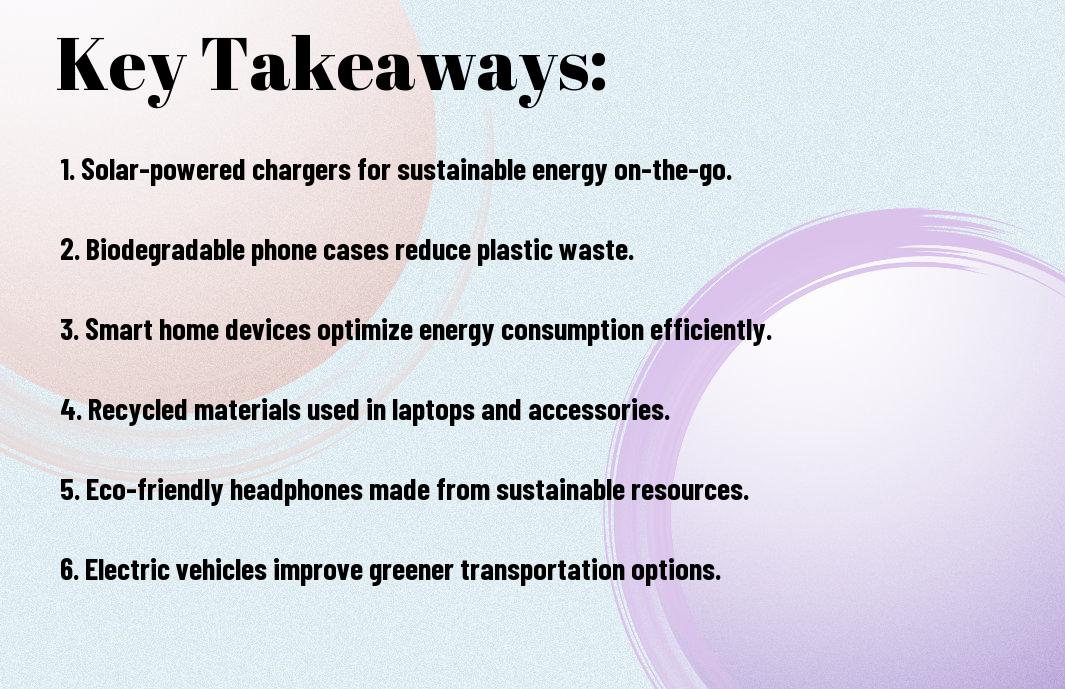
  • The best tech gadgets in 2025 will likely include devices made from sustainable materials, such as recycled plastics and bioplastics, reducing electronic waste and the environmental impact of production.
  • Innovative products like solar-powered smartphones and energy-harvesting wearables will become more prevalent, allowing users to generate their own renewable energy and minimize their carbon footprint.
  • Artificial intelligence (AI) and Internet of Things (IoT) technologies will play a significant role in developing smart home devices that optimize energy efficiency and help consumers make more eco-conscious choices in their daily lives.

Smart Home Devices

A key aspect of creating an eco-friendly home is incorporating smart devices that can help you monitor and control your energy usage. You can invest in devices that learn your schedule and preferences to optimize energy consumption, making your home more sustainable and efficient.

Energy-Harvesting Gadgets

Against the backdrop of increasing energy costs, you’ll find energy-harvesting gadgets to be a valuable investment. You can use devices that harness solar or kinetic energy to power your home, reducing your reliance on non-renewable energy sources and lowering your carbon footprint.

Eco-Friendly Lighting Solutions

On the path to a more sustainable home, you’ll want to consider eco-friendly lighting solutions. You can switch to LED bulbs or smart lighting systems that adjust brightness and color based on the time of day, allowing you to conserve energy and create a more comfortable living space.

At the heart of eco-friendly lighting solutions is the goal of minimizing energy waste. As you explore your options, you’ll find that many of these solutions are designed with your needs in mind, allowing you to customize your lighting to suit your lifestyle while reducing your environmental impact. You can control your lights remotely, adjust their brightness, and even monitor your energy usage in real-time, giving you a deeper understanding of your energy consumption and helping you make more informed decisions about your energy use.

Sustainable Computing

Clearly, sustainable computing is an imperative aspect of eco-friendly tech, allowing you to reduce your carbon footprint. You can make a significant impact by choosing devices with energy-efficient designs and environmentally friendly materials.

Green Computers and Laptops

One of the most significant steps you can take is to opt for green computers and laptops, which are designed with sustainability in mind, using recycled materials and minimizing waste, allowing you to make a more environmentally conscious choice.

Biodegradable Phone Cases

The latest innovation in phone accessories is biodegradable phone cases, made from plant-based materials that can easily decompose, reducing electronic waste and minimizing your environmental impact, giving you a guilt-free way to protect your device.

Due to the increasing concern about plastic waste, biodegradable phone cases are becoming increasingly popular, and you can now find a wide range of stylish and durable options that not only protect your phone but also contribute to a more sustainable future, allowing you to enjoy your device while doing your part for the environment.

Innovative Wearables

Now, you can stay connected while being kind to the planet with the latest eco-friendly wearables, and to learn more about other green gadgets, you can visit 8 Best Green Gadgets: Alternatives to Common Home Appliances to explore your options.

Solar-Powered Smartwatches

Behind the scenes, solar-powered smartwatches are revolutionizing the way you keep track of time, with sleek designs and sustainable energy sources, allowing you to stay connected on-the-go.

Recyclable Fitness Trackers

On the path to a greener you, recyclable fitness trackers offer a guilt-free way to monitor your fitness goals, with materials that can be reused and recycled, reducing electronic waste and minimizing your environmental footprint.

Further, when choosing recyclable fitness trackers, you’ll find that many brands now offer take-back programs, allowing you to return your old device and have it recycled responsibly, making your commitment to sustainability a long-lasting one.

Eco-Conscious Gadgets

All eco-friendly tech gadgets are designed to reduce your environmental footprint, and in 2025, you can expect to see more innovative devices that promote sustainability.

Air-Purifying Devices

Gadgets like air-purifying devices are becoming increasingly popular, helping you breathe easier in your home, as they remove pollutants and toxins from the air.

Water-Conserving Smart Sensors

EcoFriendly devices such as water-conserving smart sensors help you monitor and control your water usage, allowing you to make more informed decisions about your consumption.

Considering your water usage is a significant aspect of eco-conscious living, you can use water-conserving smart sensors to detect leaks, track your water consumption, and receive alerts when you’re using too much water, helping you make adjustments to reduce waste and lower your bills.

Green Transportation

Despite the variety of transportation options available, you’re likely looking for ways to reduce your carbon footprint. In 2025, you can expect to see a surge in eco-friendly tech gadgets that make green transportation more accessible and efficient.

Electric and Hybrid Vehicles

Across the globe, you’ll find electric and hybrid vehicles becoming increasingly popular, offering a cleaner alternative to traditional gas-guzzlers, and you can expect to see even more innovative models in the coming year.

Eco-Friendly Navigation Systems

EcoConsciously, you’ll want to consider navigation systems that optimize your route to reduce fuel consumption and lower emissions, and you can find several options that cater to your specific needs.

And as you explore eco-friendly navigation systems, you’ll discover features like traffic avoidance, alternative route suggestions, and even pedestrian-friendly paths, all designed to help you navigate your surroundings while minimizing your impact on the environment, allowing you to make informed decisions about your daily commute and travel plans.

Emerging Trends

For your eco-friendly tech journey, it’s crucial to stay updated on the latest developments, and 2025 promises to be an exciting year with numerous innovations on the horizon.

Carbon Capture Technology

Around the globe, you’ll notice a significant shift towards carbon capture technology, which will play a vital role in reducing your carbon footprint and creating a more sustainable future.

Sustainable Virtual Reality

On the forefront of eco-friendly tech, you’ll find sustainable virtual reality, which is set to revolutionize the way you interact with digital environments while minimizing environmental impact.

Another aspect of sustainable virtual reality that you should consider is its potential to reduce waste and energy consumption associated with traditional gaming and entertainment systems, allowing you to enjoy immersive experiences while doing your part for the planet.

Final Words

Considering all points, you now have a comprehensive understanding of the best eco-friendly tech gadgets in 2025. You can make informed decisions about your purchases, choosing devices that align with your values and reduce your environmental footprint. With your newfound knowledge, you can invest in sustainable technology that benefits both you and the planet, enhancing your daily life while promoting a greener future.

FAQ

Q: What are some of the best eco-friendly tech gadgets that I can expect to see in 2025?

A: In 2025, some of the best eco-friendly tech gadgets will include solar-powered smartphones, portable chargers made from recycled materials, and energy-efficient smart home devices. These innovative products are designed to reduce waste, conserve energy, and promote sustainability. For example, the latest solar-powered smartphones will be able to charge using sunlight, eliminating the need for traditional charging methods. Additionally, portable chargers made from recycled materials will help reduce electronic waste and minimize the environmental impact of disposable batteries.

Q: How do eco-friendly tech gadgets contribute to reducing carbon footprint?

A: Eco-friendly tech gadgets play a significant role in reducing carbon footprint by minimizing energy consumption, using sustainable materials, and reducing electronic waste. For instance, energy-efficient smart home devices can help reduce energy consumption by optimizing energy usage and automating tasks. Moreover, gadgets made from recycled materials reduce the demand for raw materials, decrease production waste, and minimize the environmental impact of manufacturing processes. By adopting eco-friendly tech gadgets, individuals can significantly reduce their carbon footprint and contribute to a more sustainable future.

Q: Are eco-friendly tech gadgets more expensive than traditional gadgets?

A: While some eco-friendly tech gadgets may be more expensive than their traditional counterparts, many affordable options are available in the market. In fact, some eco-friendly gadgets, such as solar-powered chargers and energy-efficient smart home devices, can help individuals save money in the long run by reducing energy consumption and minimizing waste. Moreover, many companies are now offering affordable and innovative eco-friendly tech solutions, making it easier for consumers to make sustainable choices without breaking the bank.

Q: How can I ensure that my eco-friendly tech gadget is genuinely sustainable?

A: To ensure that your eco-friendly tech gadget is genuinely sustainable, look for products that have been certified by reputable organizations, such as the Environmental Protection Agency (EPA) or the International Organization for Standardization (ISO). Additionally, check the product’s packaging and materials to ensure that they are minimal, biodegradable, or made from recycled materials. You can also research the company’s commitment to sustainability, read reviews from other customers, and check the product’s lifespan and recyclability. By doing your research, you can make informed choices and support companies that prioritize sustainability.

Q: Can I recycle my old tech gadgets to reduce electronic waste?

A: Yes, you can recycle your old tech gadgets to reduce electronic waste. Many companies, such as Apple and Samsung, offer take-back programs and recycling initiatives that allow consumers to recycle their old devices. Additionally, many local communities have designated e-waste collection centers where you can drop off your old gadgets. Before recycling your device, make sure to wipe your personal data and remove any sensitive information. Recycling your old tech gadgets helps conserve natural resources, reduces the environmental impact of mining and manufacturing, and decreases the amount of toxic waste in landfills. By recycling your old gadgets, you can help promote a more circular and sustainable economy.

How to Choose Sustainable Electronics

As you consider purchasing new electronics, you have the power to make a positive impact on the environment. You can start by educating yourself on the most eco-friendly options available. For guidance, you can check out resources like How to Buy Ethical and Eco-Friendly Electronics (2024), which provides valuable insights into sustainable electronics. By making informed decisions, you can reduce your environmental footprint and contribute to a more sustainable future with your electronic purchases.

Key Takeaways:

To make informed decisions when selecting electronic devices, consider the following points:

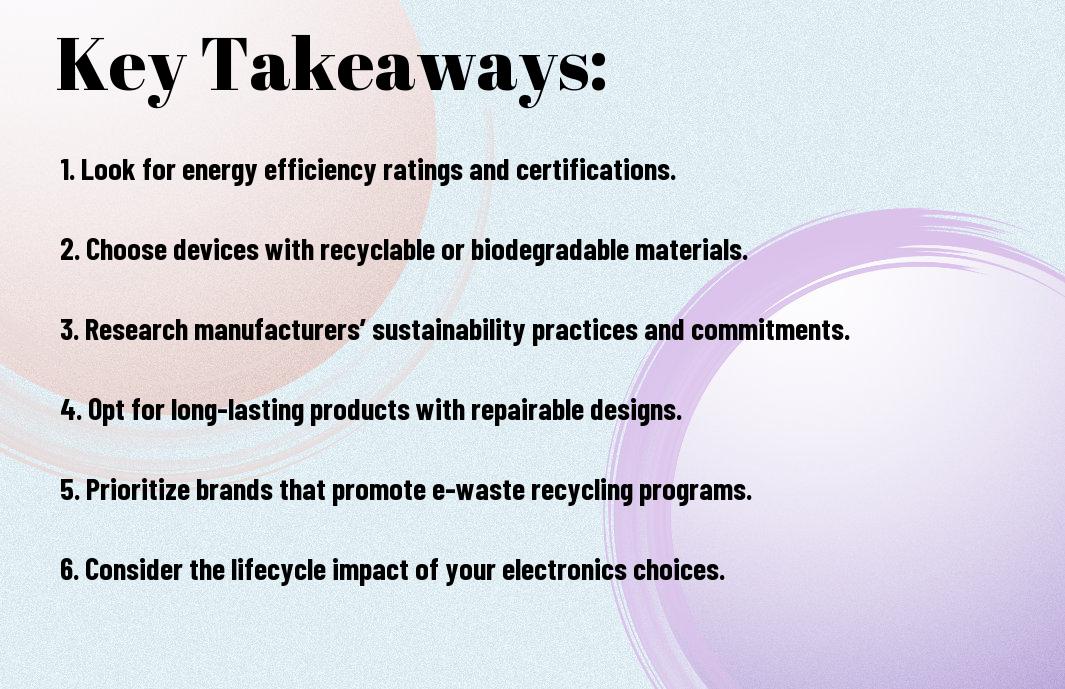
  • Look for products with energy-efficient designs and features, such as devices with low power consumption or those that use renewable energy sources, to minimize their environmental impact.
  • Choose devices made from sustainable materials, such as recycled metals or bioplastics, and opt for products with minimal packaging to reduce waste and support eco-friendly practices.
  • Consider the lifespan and upgradability of the device, selecting products with long-lasting components and repairable designs to reduce the need for frequent upgrades and electronic waste.

Defining Sustainability

Before making any decisions, you need to understand what sustainability means in the context of electronics. You will be looking for devices that have a minimal environmental impact and are produced with social responsibility in mind, considering your values and needs.

Environmental Impact

Above all, you should consider the effects of electronic devices on the environment, including energy consumption and waste generation, when evaluating your options.

Social Responsibility

To ensure that your electronics are sustainable, you need to consider the social impact of their production, including labor practices and fair trade, when making your decision.

Due to the complexity of global supply chains, you may need to research the manufacturer’s policies and practices to determine whether they align with your values and priorities, allowing you to make an informed decision that reflects your commitment to sustainability.

Assessing Electronic Devices

Even as you begin to explore your options for sustainable electronics, it’s crucial to evaluate the devices you already own and those you plan to purchase. You’ll want to consider factors such as energy consumption, durability, and the materials used in their construction.

Energy Efficiency

Besides the initial cost, you should look at the energy efficiency of a device, as this will impact your energy bills and carbon footprint over time. You can check the device’s energy rating and compare it to similar models to make an informed decision.

Materials and Manufacturing

Between the device’s design and production, there are various factors to consider, including the source of the materials and the manufacturing process. You should research the manufacturer’s policies on sustainability and e-waste management to ensure your device is made with minimal environmental impact.

In addition to considering the materials used, you should also think about the device’s lifespan and the possibility of repairing or upgrading it, rather than replacing it entirely. You can look for devices with modular designs or those that offer repair services, which can help reduce electronic waste and support a more circular economy.

Evaluating Certifications

After researching the environmental impact of electronics, you’ll likely come across various certifications that claim to promote sustainability. You should understand what these certifications mean and how they can inform your purchasing decisions.

Eco-Labels

Besides the environmental benefits, eco-labels can help you identify products that meet certain sustainability standards. You can look for labels like Energy Star or EPEAT, which indicate that a product has met specific energy efficiency or environmental criteria.

Industry Standards

Along with eco-labels, you should also consider industry standards that promote sustainable practices. You can check if the manufacturer adheres to standards like ISO 14001, which sets guidelines for environmental management systems.

Another aspect of industry standards is the level of transparency and accountability they provide. You can assess whether the manufacturer discloses information about their supply chain, material sourcing, and waste management practices, allowing you to make a more informed decision about your electronics purchase.

Considering the Lifecycle

For a more sustainable approach to electronics, you need to think about the entire lifecycle of your devices, from production to disposal, and consider the environmental impact of your choices.

Production and Packaging

Packaging materials and production processes have a significant effect on the environment, and you can make a difference by choosing products with minimal and recyclable packaging, reducing your ecological footprint.

End-of-Life Disposal

Packaging aside, the way you dispose of your old devices is also important, and you should look for manufacturers that offer take-back programs or recycling options, making it easier for you to responsibly get rid of your unwanted electronics.

At the end of your device’s life, you have the opportunity to minimize its environmental impact, and by choosing a responsible disposal method, you can help conserve natural resources, reduce waste, and decrease the risk of toxic materials ending up in landfills, ultimately contributing to a more sustainable future for your planet.

Researching Manufacturers

Unlike other purchasing decisions, choosing sustainable electronics requires a closer look at the companies behind the products. You will need to investigate their commitment to sustainability, environmental policies, and social responsibility to make an informed decision.

Company Policies

Researching a company’s stance on sustainability is crucial to understanding their values and practices. You can usually find this information on their website, where they outline their policies and goals for reducing their environmental impact.

Supply Chain Transparency

Bridging the gap between a company’s claims and actual practices is key to evaluating their sustainability. You should look for companies that provide clear information about their supply chain, including sourcing of materials and manufacturing processes.

In fact, a transparent supply chain can indicate a company’s commitment to sustainability and accountability. You can check for certifications like Fairtrade or conflict-free, which ensure that the materials used in your electronics are sourced responsibly, and look for companies that publish regular reports on their supply chain practices, allowing you to make a more informed decision about your purchase.

Making Informed Decisions

To make sustainable choices, you need to consider several factors. You will evaluate the environmental impact, energy efficiency, and durability of your electronics, ensuring your choices align with your values.

Balancing Price and Performance

Deciding on the best option requires weighing price and performance. You will assess your needs, comparing features and costs to find the best fit for your budget and requirements.

Personal Values and Priorities

Among the key factors influencing your decision are your personal values and priorities. You will consider what matters most to you, such as reducing waste, conserving energy, or supporting eco-friendly brands.

This approach enables you to make intentional purchasing decisions that not only benefit the environment but also reflect your individual priorities and lifestyle, allowing you to feel confident in your choice of sustainable electronics.

Final Words

Following this guide, you can make informed decisions when choosing sustainable electronics. You will be able to assess your needs and select devices that meet your requirements while minimizing environmental impact. By considering factors such as energy efficiency and recyclability, you can reduce your carbon footprint and contribute to a more sustainable future. Your choices will have a positive effect on the planet, and you will be confident in your ability to make eco-friendly decisions.

FAQ

Q: What are the key factors to consider when choosing sustainable electronics?

A: When choosing sustainable electronics, consider the device’s energy efficiency, material composition, and end-of-life recyclability. Look for products with energy-efficient features, such as LED displays or low-power modes, and opt for devices made from recycled or sustainable materials, like aluminum or bioplastics. Additionally, check if the manufacturer has a take-back program or recycling policy in place to ensure responsible disposal.

Q: How can I evaluate the environmental impact of an electronic device before purchasing?

A: To assess the environmental impact of an electronic device, research the product’s carbon footprint, e-waste generation, and compliance with environmental standards. Check for certifications like Energy Star or EPEAT, which indicate a product’s energy efficiency and environmental sustainability. You can also review the manufacturer’s sustainability report or website to learn about their environmental policies and practices.

Q: What are some sustainable alternatives to traditional electronic devices?

A: Consider alternatives like refurbished or second-hand devices, which can reduce electronic waste and support a circular economy. You can also explore innovative products made from sustainable materials, such as smartphones with biodegradable cases or laptops with bamboo keyboards. Furthermore, some companies offer device-as-a-service models, where you can lease or rent electronics instead of purchasing them outright, reducing waste and promoting sustainable consumption.

Q: How can I ensure that my electronic devices are disposed of responsibly?

A: To ensure responsible disposal of your electronic devices, participate in manufacturer take-back programs or drop off your devices at designated recycling centers. You can also donate working devices to organizations that refurbish and distribute them to those in need. Additionally, consider purchasing devices with modular designs, which allow for easier repair and upgrade, reducing the likelihood of electronic waste.

Q: What role can I play in promoting sustainable electronics and reducing e-waste?

A: As a consumer, you can promote sustainable electronics by making informed purchasing decisions, supporting manufacturers that prioritize sustainability, and advocating for extended producer responsibility. You can also participate in community recycling initiatives, raise awareness about the importance of e-waste management, and encourage others to adopt sustainable electronics practices. By taking these steps, you can contribute to a more circular and sustainable electronics industry.

Top Green Energy Products for Your Home

You’re about to initiate on a wild ride, ditching those dirty energy habits and joining the eco-revolution. As you Owned by a desire to reduce your carbon footprint, you’re on the hunt for the best green energy products to transform your home into a sustainable sanctuary. Get ready to plug into the latest innovations, from solar panels to smart thermostats, and discover how you can harness the power of clean energy to fuel your daily life, all while saving some serious cash and the planet.

Key Takeaways:

To make your home more energy-efficient and eco-friendly, consider the following:

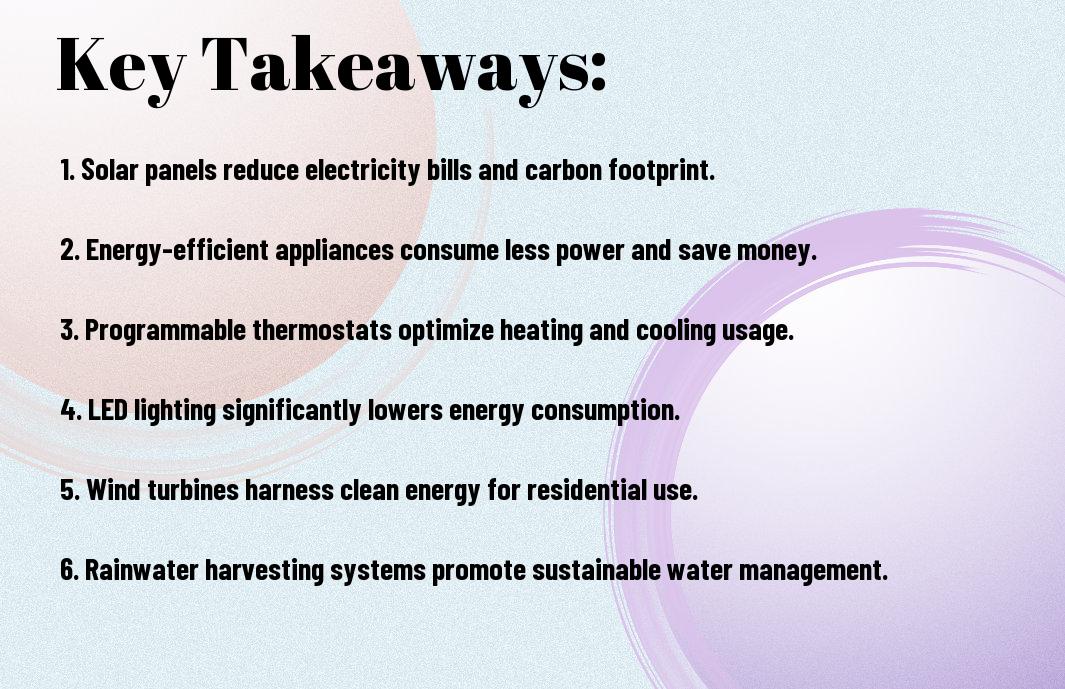
  • Investing in solar panels to generate renewable energy and reduce your reliance on non-sustainable sources.
  • Using energy-efficient appliances with high Energy Star ratings to minimize energy consumption and lower your utility bills.
  • Implementing a smart home system to monitor and control your energy usage, providing you with real-time data to make informed decisions about your energy conservation efforts.

Solar Power Solutions

Astonishingly, you’re on the verge of unleashing the raw energy of the sun to power your home, and it’s about to blow your mind. You’re stepping into a realm where the old rules don’t apply, and the possibilities are endless.

Solar Panels for Home Use

Tuning into the solar panel vibe, you’ll find that these sleek, modern devices are harnessing the sun’s energy to fuel your daily life, and it’s a wild ride. You’ll be generating your own electricity, free from the shackles of the grid.

Solar Water Heaters

Amazingly, an innovative solution like solar water heaters can slash your energy bills and carbon footprint, and you’ll be feeling like a total boss. You’ll be leveraging the sun’s power to heat your water, and it’s a game-changer.

Above all, when you dive deeper into solar water heaters, you’ll discover a world of efficiency and sustainability that will leave you breathless. You’ll be able to heat your water using the sun’s energy, even on cloudy days, and it’s a trip like no other, taking you to a place where your energy needs are met with minimal environmental impact, and you’ll be loving every minute of it.

Energy-Efficient Appliances

Some of the most effective ways to slash your energy bills are by replacing your old appliances with energy-efficient ones, and you’re in luck because the options are endless, my friend. You can ditch those clunky old machines and upgrade to sleek, eco-friendly models that’ll save you cash and reduce your carbon footprint.

LED Lighting Options

Prior to making the switch, you’ll want to explore the vast array of LED lighting options available, and trust me, you won’t be disappointed. You’ll find LED bulbs that fit your style, from vintage vibes to modern minimalist, and they’ll use a fraction of the energy of those old incandescent bulbs.

Eco-Friendly Refrigerators

Around the kitchen, you’ll want to take a gander at the eco-friendly refrigerators on the market, and you’ll be blown away by the innovative tech that’s been developed. You’ll find fridges with advanced insulation, smart sensors, and sleek designs that’ll make your old clunker look like a relic from the Stone Age.

Even as you’re browsing through the eco-friendly refrigerator options, you’ll start to notice the ingenious ways manufacturers are reducing energy consumption, and you’ll be amazed at how much of a difference it can make. You’ll see features like automatic door closures, advanced temperature control, and smart defrosting, all designed to save you money and reduce your environmental impact, and you’ll wonder how you ever lived without them, my friend.

Wind Energy for Homes

Once again, you’re on the cusp of a revolution, my friend, and this time it’s all about harnessing the power of the wind to fuel your home. Wind energy is a clean, sustainable way to reduce your reliance on fossil fuels and lower your carbon footprint.

Residential Wind Turbines

Beneath the surface of the traditional energy landscape, you’ll find residential wind turbines, which can be installed on your property to generate electricity. You can choose from a variety of turbines, from small, rooftop models to larger, freestanding units.

Wind Energy Benefits

Oddly enough, one of the most significant advantages of wind energy is its ability to save you money on your utility bills. You’ll be generating your own clean energy, reducing your reliance on the grid, and decreasing your energy costs.

For instance, as you examine deeper into the world of wind energy, you’ll discover that it also increases your property value, provides a sense of energy independence, and contributes to a cleaner environment. You’ll be joining a movement, a crusade against the status quo, and embracing a future powered by sustainable, renewable energy.

Green Home Insulation

Not only does green home insulation reduce your energy consumption, but it also helps minimize your carbon footprint. You can make a significant impact by incorporating eco-friendly materials and techniques into your home.

Eco-Friendly Insulation Materials

One of the most effective ways to go green is by using recycled materials, such as denim or cellulose, for insulation. You’ll be amazed at how these materials can reduce heat transfer and keep your home cozy.

Proper Insulation Techniques

One key aspect of green home insulation is ensuring that your insulation is installed correctly. You need to seal all gaps and cracks to prevent heat from escaping, and consider factors like climate and building design when choosing your insulation.

Due to the complexity of proper insulation techniques, you may want to consult a professional to ensure that your home is insulated to perfection. You’ll be glad you did, as a well-insulated home can save you money on energy bills and reduce your environmental impact, allowing you to live a more sustainable lifestyle, and that’s a wild ride you’ll want to be on.

Hydro Energy Systems

For those looking to harness the power of water, hydro energy systems are a fantastic option. You can tap into the kinetic energy of moving water to generate electricity for your home, reducing your reliance on fossil fuels and lowering your carbon footprint.

Home Hydro Power Systems

Contrary to what you might think, installing a home hydro power system is not as complicated as it sounds. You’ll need to assess your water source and choose the right equipment, but the payoff is well worth the effort, as you’ll be generating clean energy and saving money on your utility bills.

Hydro Energy Advantages

Along with the environmental benefits, hydro energy systems offer a number of advantages, including low operating costs and a long lifespan. You’ll be able to generate electricity for your home with minimal maintenance and upkeep, making it a great choice for those looking for a hassle-free energy solution.

Hence, as you consider making the switch to hydro energy, you’ll find that the advantages far outweigh the disadvantages. You’ll be doing your part for the environment, saving money, and gaining energy independence – what’s not to love about that? You’ll be joining the ranks of the energy revolutionaries, harnessing the power of nature to fuel your home and your life.

Geothermal Energy

Your home can be a powerhouse of sustainable energy with geothermal systems, harnessing the earth’s heat to warm and cool your space, a wild ride into the future of eco-friendly living.

Residential Geothermal Systems

Around the clock, these systems work tirelessly, using the consistent temperature of the earth to regulate your home’s climate, a steady beat that saves you money and the planet.

Geothermal Energy Savings

For your wallet and the environment, geothermal energy is a significant step forward, slashing your energy bills and carbon footprint with each passing day, a rebellious stance against the status quo.

But as you examine deeper into the world of geothermal energy savings, you’ll find that the benefits are not just monetary – you’re also investing in a cleaner, healthier planet, and a home that’s a sanctuary from the chaos, a place where you can live life on your own terms, unapologetically and with a clear conscience, man.

Summing up

On the whole, you’ve got the lowdown on the top green energy products for your home, and now it’s time to kick it into high gear. You’re ready to harness the power of solar panels, wind turbines, and energy-efficient appliances to slash your carbon footprint and save some cash. Your journey to a more sustainable lifestyle is just beginning, and with these products, you’ll be fueling your home with clean energy in no time, so buckle up and get ready to join the green revolution.

FAQ

Q: What are the benefits of using green energy products in my home?

A: Using green energy products in your home can have numerous benefits, including reducing your carbon footprint, lowering your energy bills, and creating a healthier living environment. Green energy products, such as solar panels and energy-efficient appliances, can help reduce your reliance on non-renewable energy sources, decrease your energy consumption, and minimize your impact on the environment. Additionally, many green energy products are designed to improve indoor air quality, reduce noise pollution, and provide a safer living space.

Q: What are some of the top green energy products for my home?

A: Some of the top green energy products for your home include solar panels, wind turbines, energy-efficient windows, and smart thermostats. Solar panels can help generate electricity from sunlight, while wind turbines can harness wind energy to power your home. Energy-efficient windows can help reduce heat loss and gain, and smart thermostats can optimize your heating and cooling systems to reduce energy consumption. Other notable green energy products include energy-efficient lighting, rainwater harvesting systems, and geothermal heating and cooling systems.

Q: How can I determine which green energy products are right for my home?

A: To determine which green energy products are right for your home, consider factors such as your energy usage, climate, and budget. Assess your energy consumption patterns to identify areas where you can reduce your energy usage. Consider the climate and weather conditions in your area to determine which green energy products will be most effective. Research different products and their costs, and consult with professionals to determine the best solutions for your home. You may also want to consider factors such as product durability, maintenance requirements, and potential rebates or incentives.

Q: Are green energy products expensive to install and maintain?

A: While the initial cost of installing green energy products may be higher than traditional energy solutions, they can provide long-term savings and benefits. Many green energy products, such as solar panels and energy-efficient appliances, are designed to be durable and require minimal maintenance. Additionally, many governments and organizations offer rebates, tax credits, and incentives to encourage the adoption of green energy products. Over time, the energy savings and increased property value can offset the initial investment, making green energy products a cost-effective solution.

Q: Can I install green energy products myself, or do I need to hire a professional?

A: While some green energy products, such as energy-efficient light bulbs, can be easily installed by homeowners, others may require professional installation. For example, solar panel installation typically requires specialized knowledge and equipment, and should be performed by a certified professional. Similarly, wind turbine installation and geothermal system installation require expertise and specialized equipment. It’s vital to assess your DIY skills and the complexity of the installation before attempting to install green energy products yourself. If you’re unsure, it’s best to consult with a professional to ensure safe and proper installation.

Skip to content